 Reg Reg Where performance counts! |
|
Raising Sagebrush PuppiesPuppies take an enormous amount of time! Our puppies are always raised in the house. We raise our litters as if each puppy was a future show champion and performance competitor. Early socialization is essential for puppies of all breeds, but especially critical in Shelties, whose breed standard specifies that they may be reserved toward strangers. |
|
The puppies' mother is put on a deworming program to prevent roundworm and hookworm transmission to the puppies. We follow the recommendations of the Companion Animal Parasite Council and deworm the puppies (and their mother!) every two weeks from three to ten weeks of age. An ova and parasite fecal exam is done at about seven weeks. They are vaccinated with a Distemper-Adenovirus2-Parvovirus vaccine every three weeks starting at six weeks. All puppies have their eyes examined by a veterinary ophthalmologist between eight and nine weeks of age. |
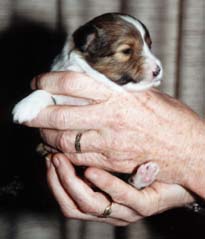
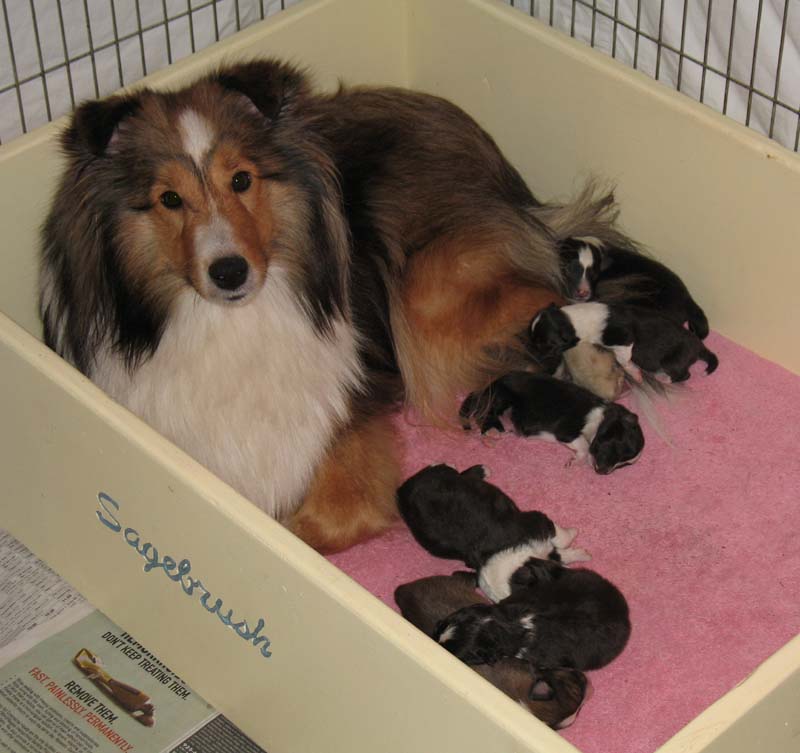
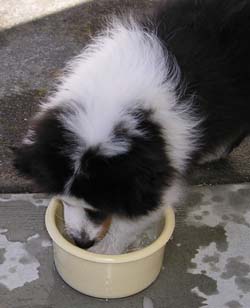
Our whelping boxes are set up in either a spare bedroom or in the family room, depending on the needs of the dam and the time of year. The dam can leave the box into a surrounding exercise pen when she wishes. If the pups will need artificial heat, I use a heat lamp with a dimmer switch to avoid overheating mother and pups. For the first three weeks, each puppy is weighed on a daily basis. I also trim the tiny claws weekly, because they start to scratch their mother while nursing. From the third through the sixteenth day of life, each puppy is gently handled through the Bio-Sensor or Super Puppy positions. Some studies have indicated that the very mild stress of this handling makes the puppies better able to handle stresses later in their life. By age three weeks, all whelping boxes are located in an exercise pen in the family room, where they can see and hear the coming and going of the people and other dogs in the family. They can hear the stereo and the television. When they start to routinely escape from their whelping crate, the box is removed, and the pups are free to explore the whole pen. Somewhere between three and four weeks, the puppies start to eat solid food. Initially, I pulverize the dry puppy kibble in a blender and mix it with water to a cereal consistency. After a couple a weeks, I stop running it through the blender. Gradually, I cut back on the water until the puppies will readily eat dampened food by age 7 or 8 weeks. Since mine is a quiet house, I frequently play one of several desensitizing sound tapes when I feed the puppies. I have a tape of agility noises, that includes a slamming teeter totter, and two tapes of dog show noises. Within a few days, the puppies associate the tape playing with an upcoming feeding. After three weeks, the puppies are weighed weekly, and I measure each puppy's shoulder height weekly starting at six weeks. I try to trim their little nails every couple of weeks, and by the time they are ready to leave, they have had at least one bath and have been brushed out several times. |
|
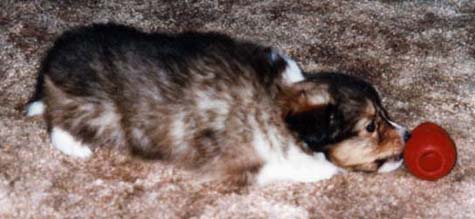
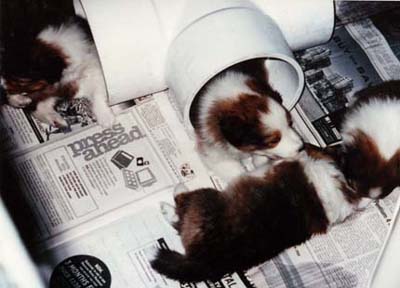
At between three and four weeks, the puppies start to notice each other and make the first play gestures at the other puppies. When this happens, I begin to introduce play items into their pen. Six inch PVC elbows and tees make puppy tunnels. A stool makes something to climb over and under. A wobble board gets them used to surfaces that shift under their feet. A variety of toys expose them to many different shapes and textures–although their favorite playthings may not be authorized puppy toys. |
|
|
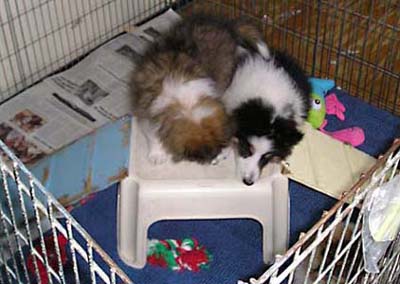
|
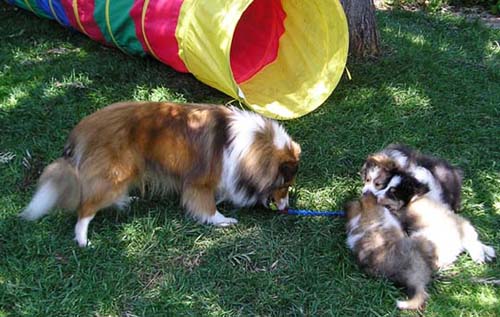
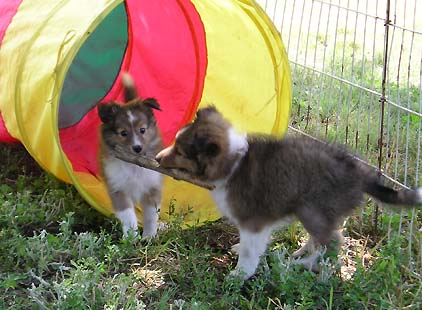
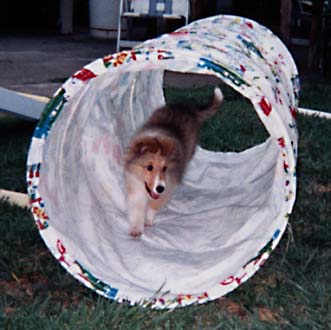
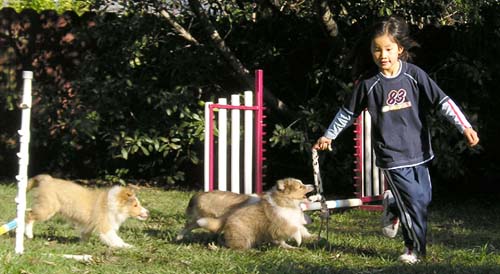
As soon as the puppies are walking around they are introduced to other members of the household–puppy-friendly older dogs. By five weeks, they are going outside to play, and are learning the sights and sound of the backyard. They have a variety of outdoor toys–agility tunnels, jump bars laid on the ground, the big plastic pots that shrubs come in, and all the usual sticks and stones of the great outdoors. |
|
|
|
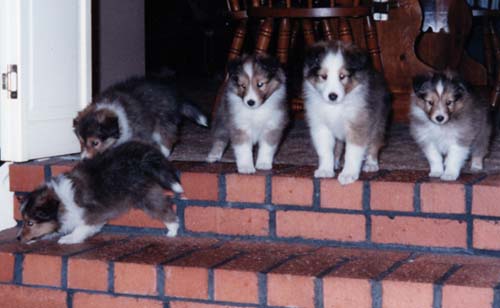
In our new home, the puppies no longer have steps to negotiate. But they still learn to jump up the one step between the family room and hall, and to jump up onto various plastic tubs outdoors. They learn about gravel, grass, carpet, wood and vinyl floors–and about ice cubes! |
|
|
|
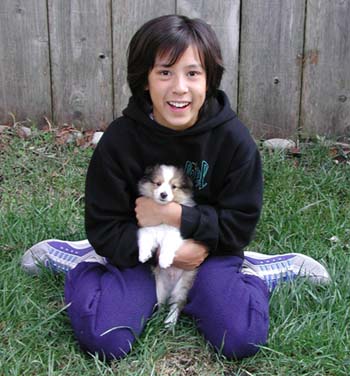
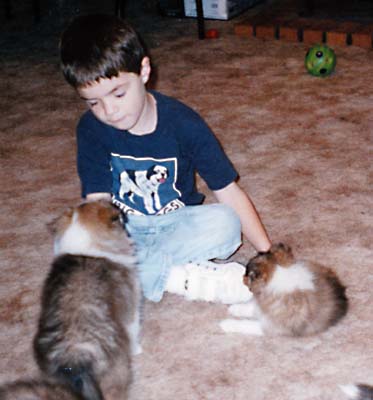
The puppies are exposed to outside people from about three weeks of age on. Friends, fellow Sheltie breeders and potential puppy buyers are all welcome to come and play with them. I encourage people to bring their children over for "Puppy Patrol" and they cheerfully teach the puppies the joys of chase games, tug-o-war and cuddling. |
|
|
|
|
Puppies are ready to go to their permanent homes at nine to ten weeks. At that age, I can begin to sort out the puppies, to decide which ones to grow out, and which ones to place. I can begin to see differences in size, body structure and temperament that will help me decide what kind of home is ideal for each pup. |